
As the new year approaches, many of us in Japan may be planning to experience “Hatsumode”, the first visit to a temple or shrine of the new year. At the same time, it can be nerve racking to visit one during such an important as a foreigner; how do we behave so that we do not accidentally disrespect local customs? A fellow writer for this site has authored a fantastic guide to shrine visit etiquette, so I will be providing an English translation, along with added tips that might be useful for tourists!
How to Identify Shrines
As you may know, Japanese religious traditions consists mainly of Buddhism and Shinto. Naturally, there is a distinction between Buddhist places of worship (often referred to as “Temples” or “Monasteries”), and Shinto places of worship (often referred to as “Shrines”). As the conventions of paying respects differ between these two traditions, it is important to keep in mind that the following practices apply to Shinto shrines. To identify a shrine,
1. Name
The name of the place of worship is a useful way to identify its religious affiliation. Buddhist temples, in general, are often suffixed with “Ji”, “Tera/Dera” (both 寺), or “In” (院). Shinto shrines, in contrast, are often suffixed with “Jinja” (神社), “Taisha” (大社), “Gu” (宮) or “Jingu” (神宮).
2. Architecture and Aesthetics
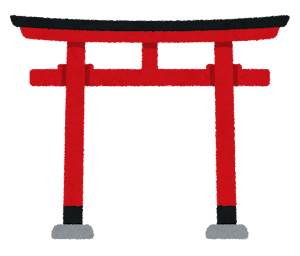
In general, Shinto shrines have the iconic “Torii” gate at the main entrance.
3. Maps and Guides
Another foolproof way would be to check maps (Physical maps, or digital maps like Google Maps), as the affiliation of the institution will often be listed on it. Temples/shrines nowadays also often have guides in the facilities themselves, so keep a lookout for those too!
It is important to keep in mind that there can be exceptions, and Buddhist temples can often house Shinto shrines within its vicinity, and Shinto shrines can house Buddhist deities as well. There are even places such as Yushima Seido, which do not fall into either the Buddhist or Shinto category, being a Confucian temple instead.
The Torii
The iconic Torii gate symbolises the boundary between the ordinary and divine realms, once one steps into the boundary within the Torii, they are in the territory of the divine. Therefore, when entering the shrine, we adopt the attitude of visiting someone important and respected. With this in mind, we should take a bow before stepping through the Torii. After paying our respects, after exiting through the Torii, turn to face the Shrine and take a bow again.
One thing to take note of: In the shrine, the centre of the walking path is known as the “Shōchū”, and the gods are believed to walk along the middle of the path. Therefore, to show respect, it is advised not to walk on the middle of the path, but to walk along the sides instead.
Chōzu
Have you noticed worshippers washing their hands at the water basins near the entrance of shrines? That is known as “Chōzu”, and the basin is known as the “Chōzu-ya”. Chōzu purifies the body in preparation for paying respects in the shrine. Here is the procedure for Chōzu:
1. Hold the dipper in your right hand, scoop up some water and wash your left hand.
2. Hold the dipper in your left hand, and wash your right hand in the same manner.
3. Hold the dipper in your right hand again, scoop up some water, pour it into your left hand, and use it to wash your mouth. Do not place the dipper directly to your mouth.
4. Wash your left hand in the same manner again.

Paying Respects
One can make wishes and express gratitude to the gods, or even just pay respects secularly as a sign of respect to local customs. When doing so, here are the procedures:
1. First, take a proper posture in front of the gods
2. Straighten your back, and take two 90° bows.
3. Bring your palms together at the chest level, with your right hand very slightly below your left.
4. Bring your hands apart to shoulder width, and clap two times
5. With your palms together, take a final bow.

Source: https://www.jinjahoncho.or.jp/omairi/osahou/sanpai
Offering a Tamagushi
It is possible to offer a branch of a sakaki tree, known as a “Tamagushi”, to the gods. This can be done on special occasions such as festivals, or during regular visits. The Tamagushi is a fresh sakaki branch with a piece of cotton wool, hemp or paper known as shimadarushide attached to it.
The procedure for offering respects with the Tamagushi is the same as above!

Thank you for reading this article, we hope you have a wonderful New Year, and a pleasant Shrine visiting experience!
Here’s the original article (in Japanese): https://jinjabukkaku.online/shirine/